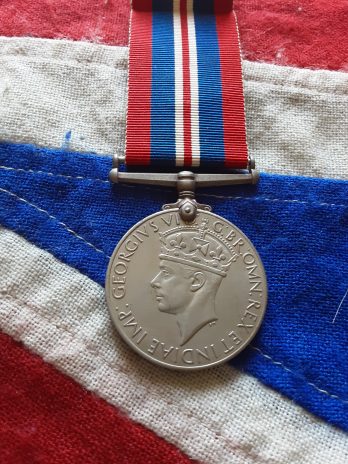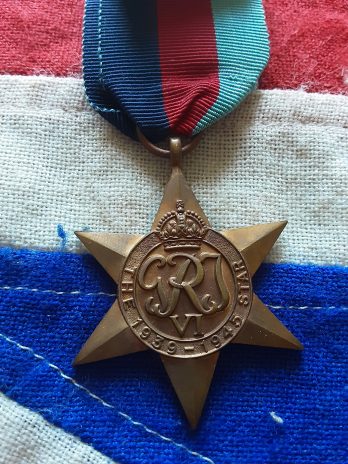
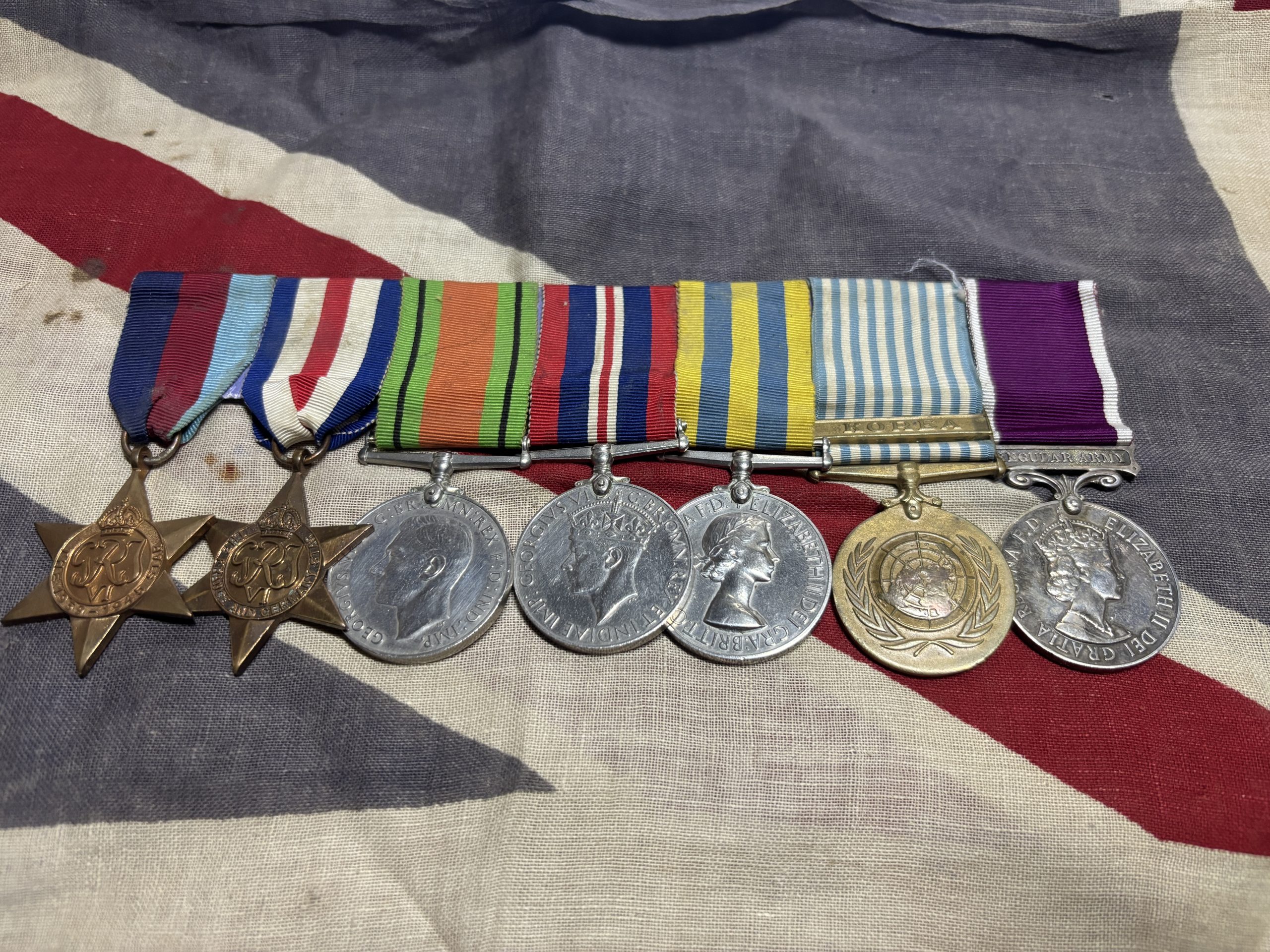
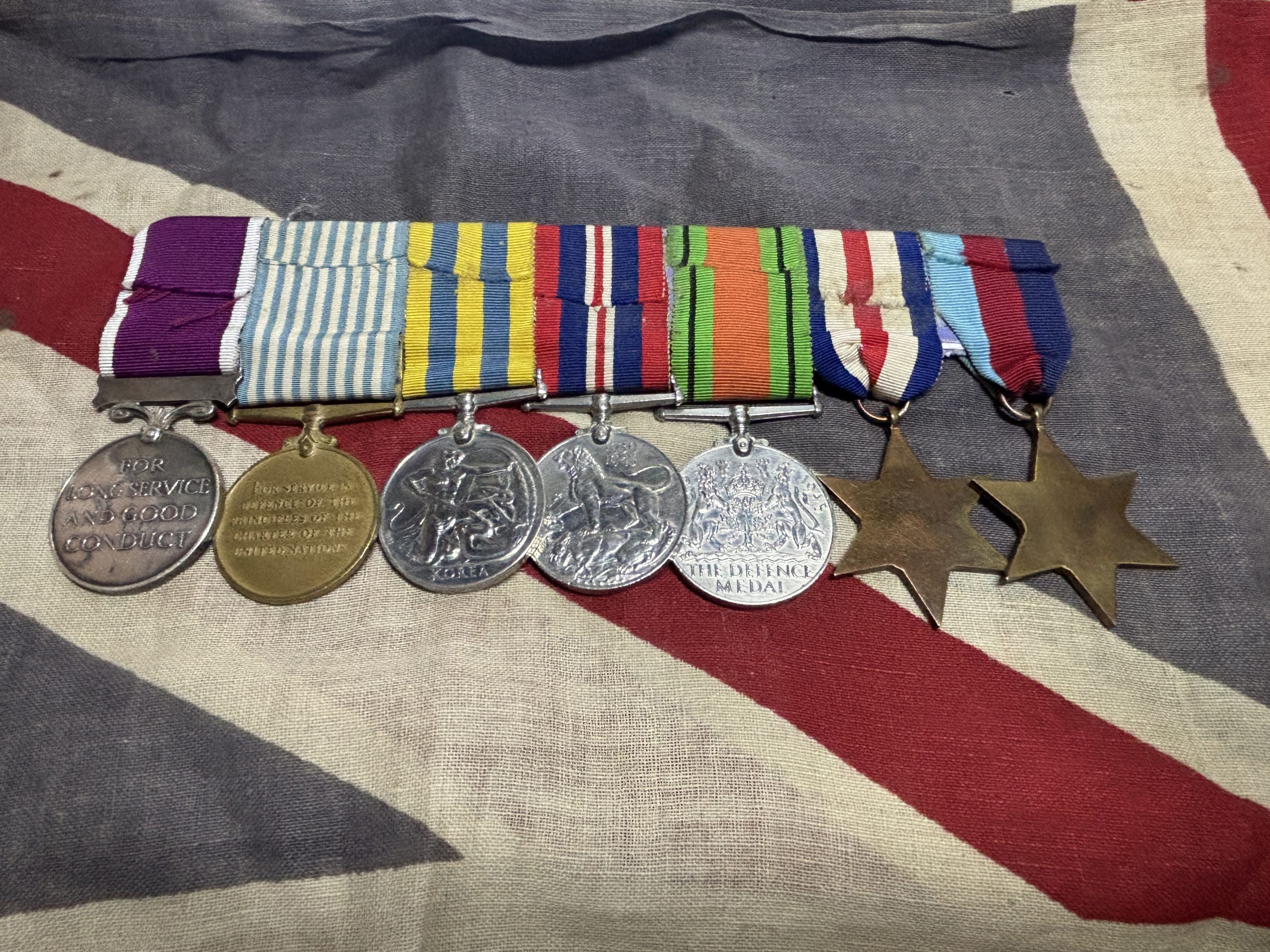
WWII medals unnamed as issued
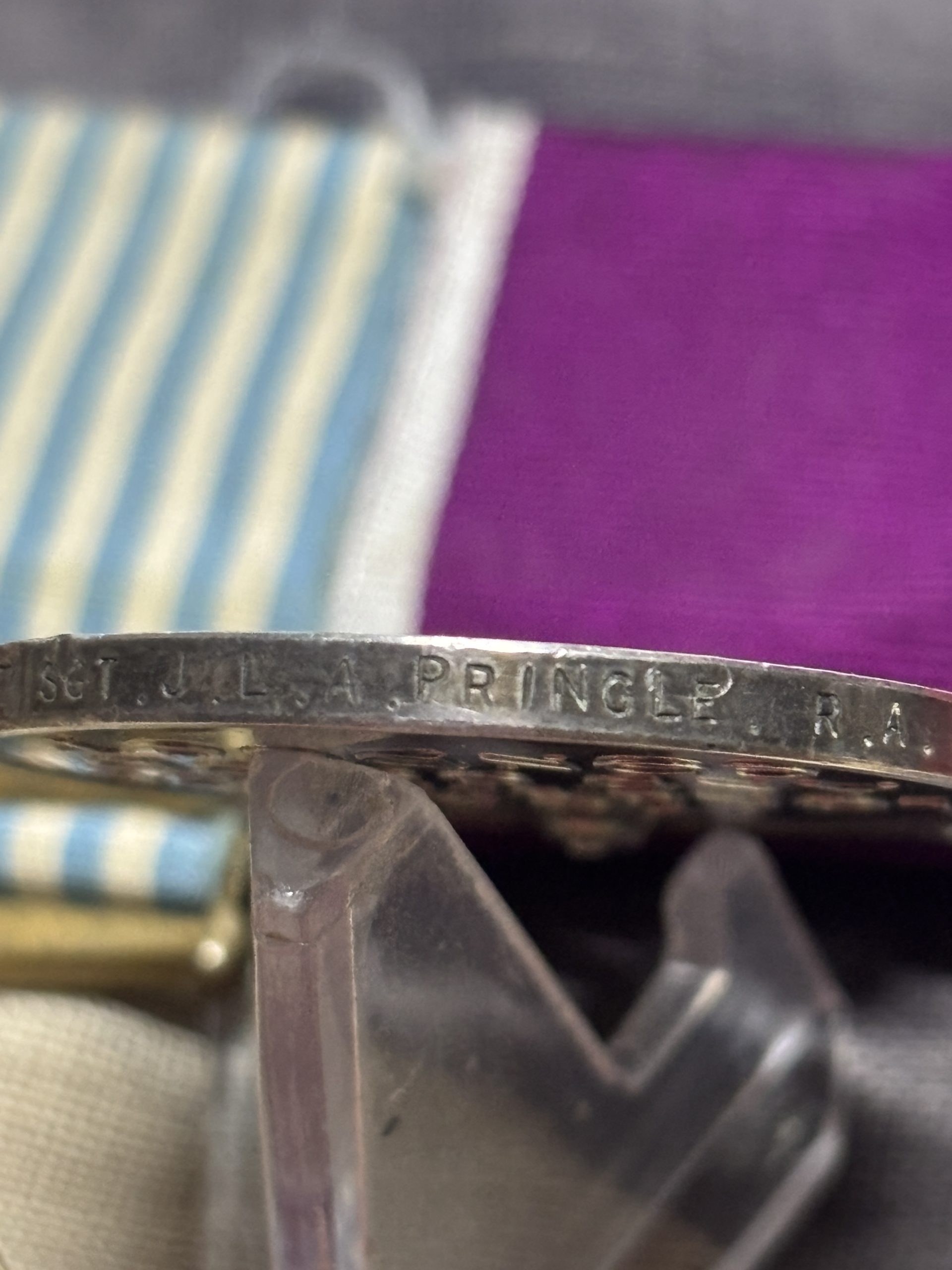
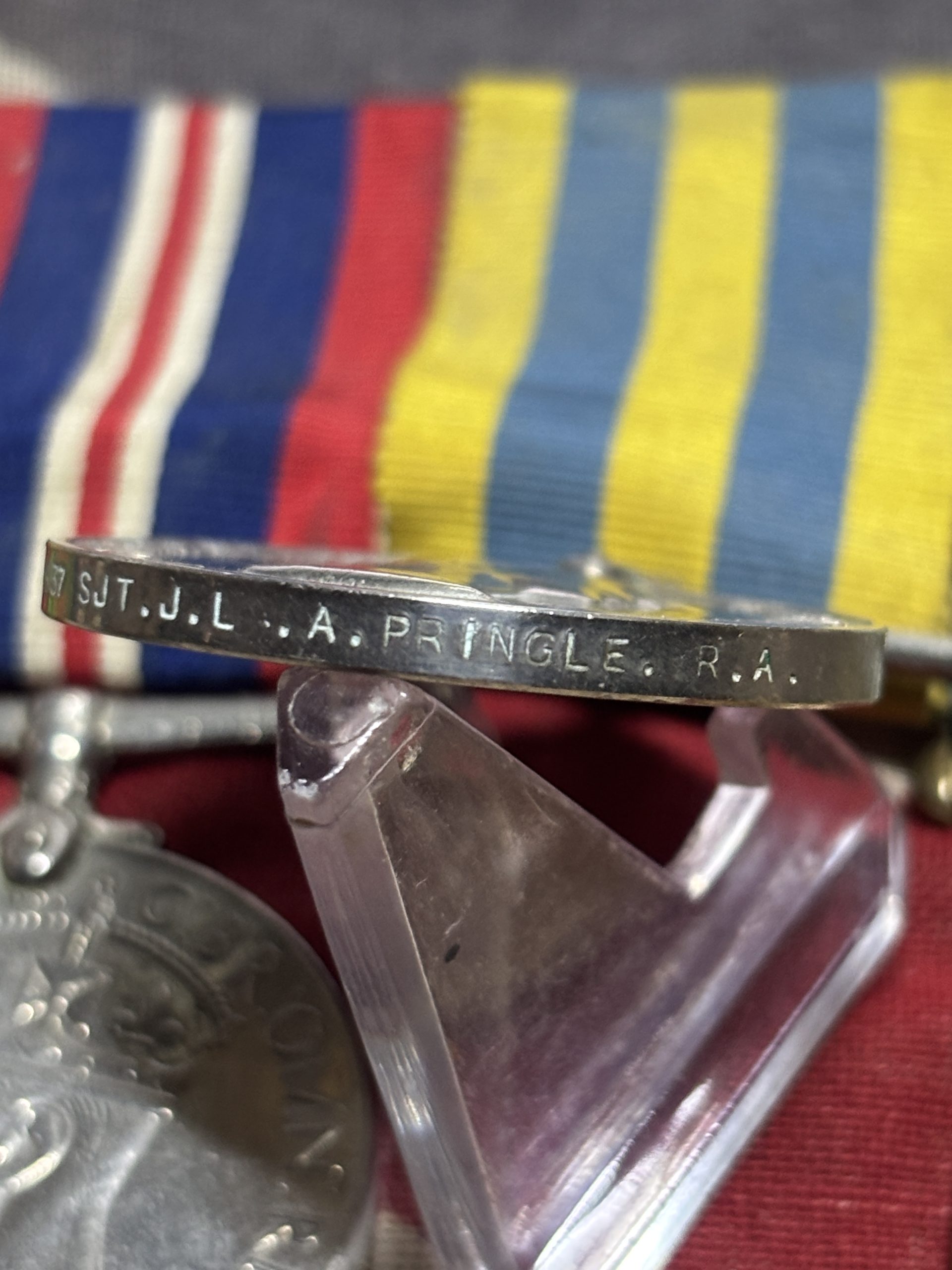
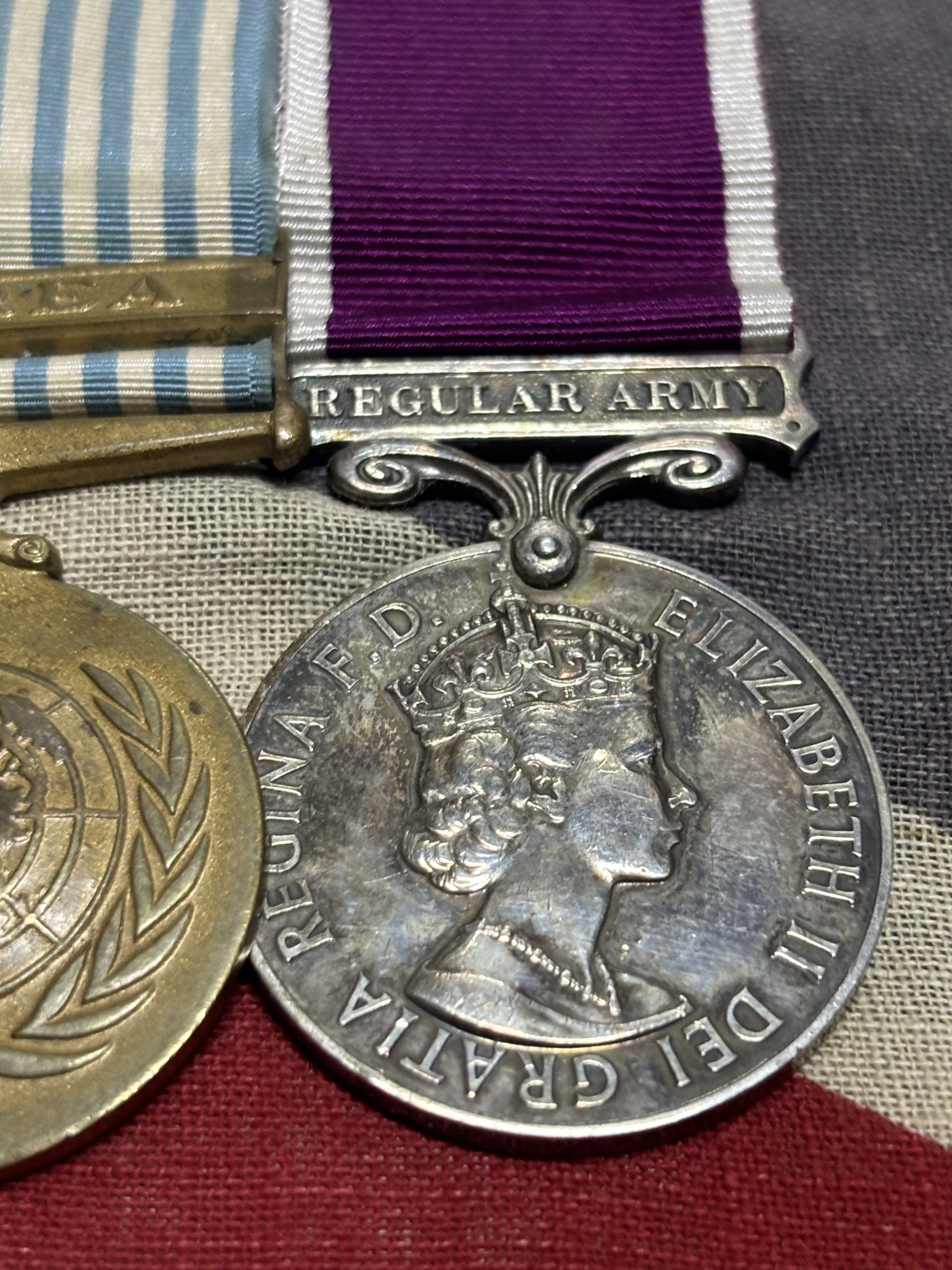
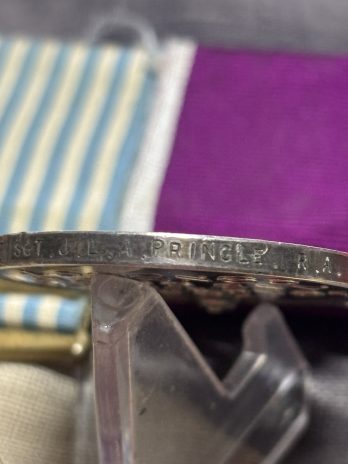
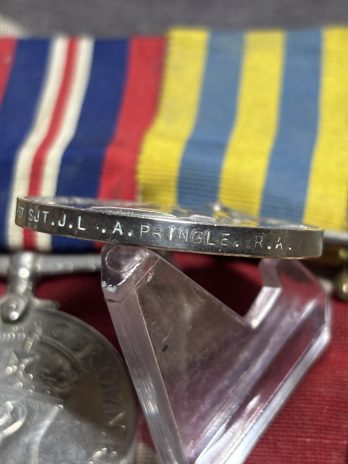
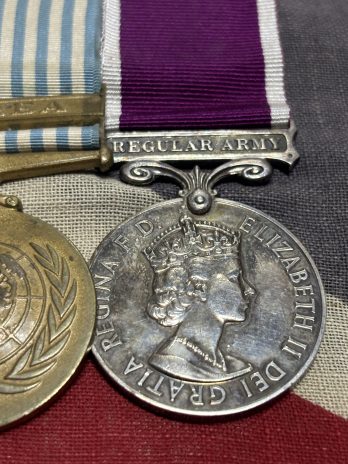
Queens Korea Medal correctly named 935937 Sjt JLA Pringle RA
LSGC correctly named 935937 Sjtr JLA Pringle RA
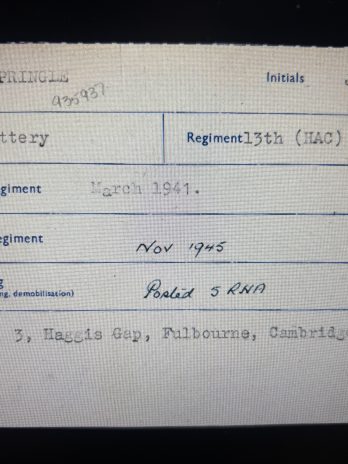
John Lewis Alexander Pringle was born in December 1920 in Morpeth, Cumberland, Northumberland.
His mothers name was Jane Annie Pringle but no record for a fathers name.
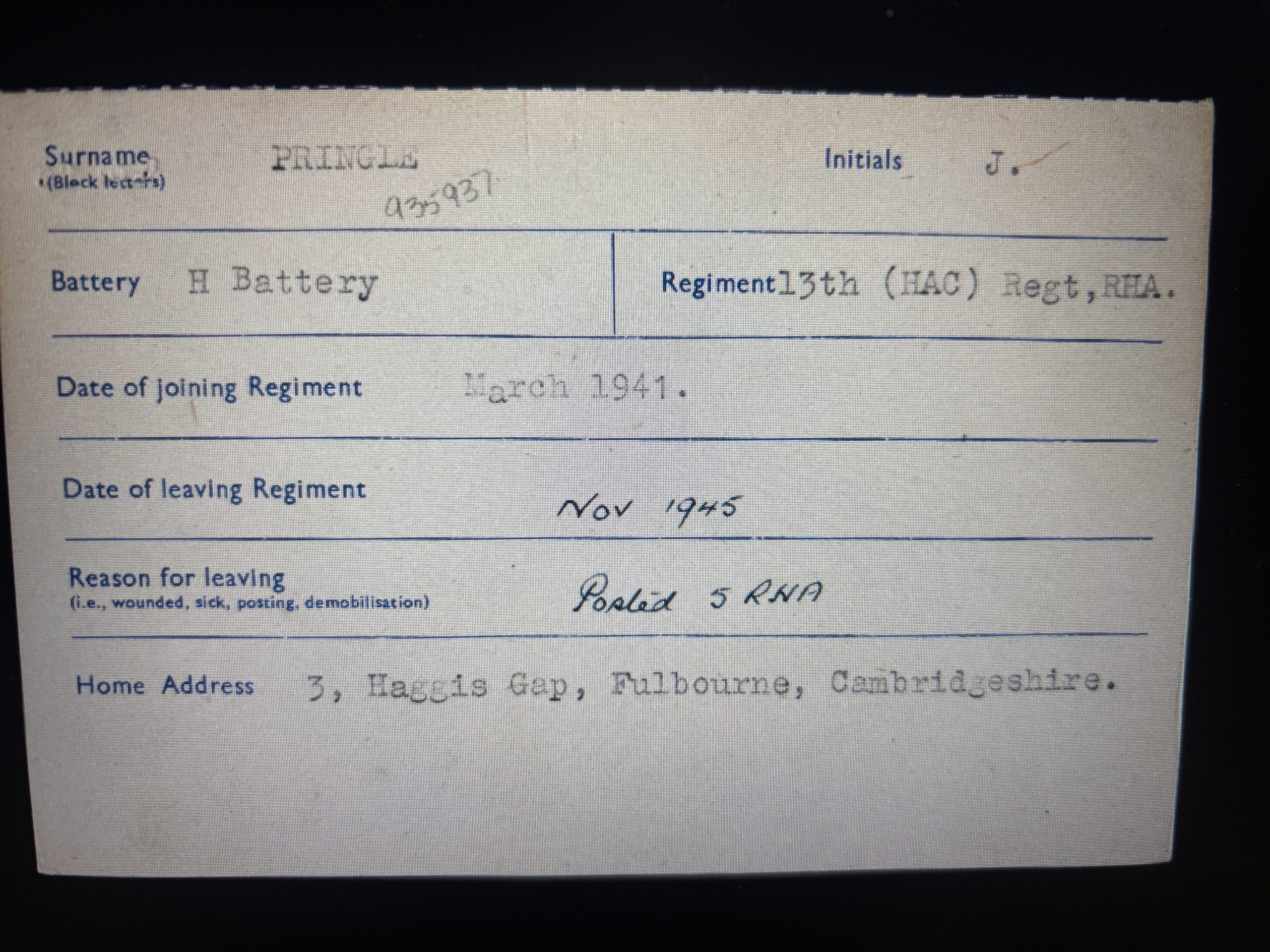
He enlisted into the 13th Honourable Artillery Company RBHA Regt in March 1941.
He was extracted to the National Service Reserve.
His LSGC was awarded September 1959.
An address found for him during research is 3 Haggis Gap, Fulbourne, Cambridgeshire.
John died in 1989.
All medals have original silk ribbons and are mounted on a card strip.
At the outbreak of war, the HAC Infantry Battalion was converted into 162 (HAC) Officer Cadet Training Unit and supplied officers to other regiments. Two HAC companies in the 30th [originally 13th] (Home Defence) Battalion,
Royal Fusiliers, defended the East London docks.
The 86th (HAC) HAA Regiment RA, by then comprising 273, 274, 383 and 446 Batteries, landed in France on D-Day, 6 June 1944. Similarly, the 13th (HAC) Regiment RHA, which had been raised in December 1940 with G, H and I Batteries, landed in Normandy on 15 June. Both regiments fought through to Belgium and on into Germany.
The 13th (HAC) Regiment RHA equipped with Sexton self-propelled guns fought in Normandy, the Netherlands and across the Rhine into Germany as part of 11th Armoured Division.
The 11th Armoured Division was an armoured division of the British Army which was created in March 1941 during the Second World War. The division was formed in response to the unanticipated success of the German panzer divisions. The 11th Armoured was responsible for several major victories in the Battle of Normandy from in the summer of 1944, shortly after the Normandy landings, and it participated in the Allied advance from Paris to the Rhine, the Rhine crossing in March 1945. It was disbanded in January 1946 and reformed towards the end of 1950. In 1956, it was converted into the 4th Infantry Division.
Normandy 1944.
Most of the 11th Armoured Division landed on Juno Beach on 13 June 1944 (D+7),seven days after the 3rd Canadian Division had landed on D-Day. It was deployed in all major operations of the British Second Army, including Operations Epsom, Goodwood, and Bluecoat, and the battles around the Falaise Gap.The 11th Armoured Division, as part of the VIII Corps, was committed to action on 26 June 1944 as part of Operation Epsom. It entered the Scottish ‘corridor’, opened beforehand by the 15th (Scottish) Infantry Division. Despite mistakes in navigation, which slowed down the 159th Infantry Brigade in Mouen, the 11th managed to seize the bridges at Grainville and Colleville. It then progressed southward to Hill 112 (a dominant feature in the Normandy landscape near the village of Baron) and succeeded in capturing and holding this high ground against increasingly intense German counter-attacks. However, a renewed attack by fresh SS-Panzerdivisions transformed what was intended as a breakthrough into a battle for position. Before the German reinforcements could attack, General Bernard Montgomery ordered a withdrawal from the hilltop.
The 11th Armoured was then moved to the east of Caen to spearhead Operation Goodwood. Planning and execution errors, coupled with strong German defences, led to a tactical British defeat. Goodwood was cancelled on 20 July, with the 11th Armoured being withdrawn from the front line to rest and refit. In only two days of fighting, it had lost 126 tanks.
The 11th Armoured was directed again to the west, to take part in Operation Bluecoat. Beginning on 30 July 1944 it seized Saint-Martin-des-Besaces. The division spotted an intact bridge on the Souleuvre river, which enabled it to drive the Germans back. In what became the famous “Charge of the Bull”, the division liberated Le Bény-Bocage on 1 August and quickly progressed southward. Although severely weakened at that time, the German army remained ever-present and dangerous. From 5 August, The 11th Armoured worked with the Guards Armoured Division and 15th (Scottish) Infantry Division to push back a counter-attack of the 9th SS Panzer Division.
Belgium and the Netherlands
M4 Shermans of the 23rd Hussars advance through Deurne, 26 September 1944
After a night move, and an unprecedented advance of 60 miles in one day, the division liberated Amiens on 1 September. The same day, it captured General Heinrich Eberbach, commander of the Wehrmacht’s German 7th Army. Advancing to Lens, then Tournai, the division was then committed to the fight for Antwerp, which it liberated on 4 September. Two days later, it tried to establish a bridgehead over the Albert Canal, but the attempt, due to intense enemy fire, was not successful. After this failure, 11th Armoured had to cross much further to the east, at Beringen. The division was not directly committed to Operation Market Garden. Instead, it was tasked with securing the right flank of the operation. Attached to VIII Corps, it began moving on 18 September. Advancing in two columns, it managed to reach the US 101st Airborne Division at Nuenen, while on the 22nd, its engineers established a bridge over the Zuid-Willemsvaart canal. The division could then make an encircling move around Helmond, forcing the Germans to withdraw on 25 September.
Germany.
On 30 April 1945 the 11th Armoured Division launched their last attack. It crossed the Elbe at Artlenburg, then against little opposition, occupied Lübeck on 2 May and Neustadt on 3 May (Cap Arcona). It finished the war by patrolling the surrounding countryside, collecting 80,000 prisoners which included 27 Generals. After the German surrender, the 11th Armoured Division was used as an occupation force in the Schleswig-Holstein area. On 23 May, units of the division were employed in the capture of members of the Dönitz Government in Flensburg.
The 11th Armoured Division was disbanded shortly after the end of the war at the end of January 1946. During the campaign in northwestern Europe, from June 1944 until May 1945, the division had lost almost 2,000 officers and men killed in action and more than 8,000 wounded or missing in action.
Related products
-
WWII
Bulk lot of 5 WW2 War Medals unissued in original wax packets .
Original price was: £48.00.£45.00Current price is: £45.00. Add to basket