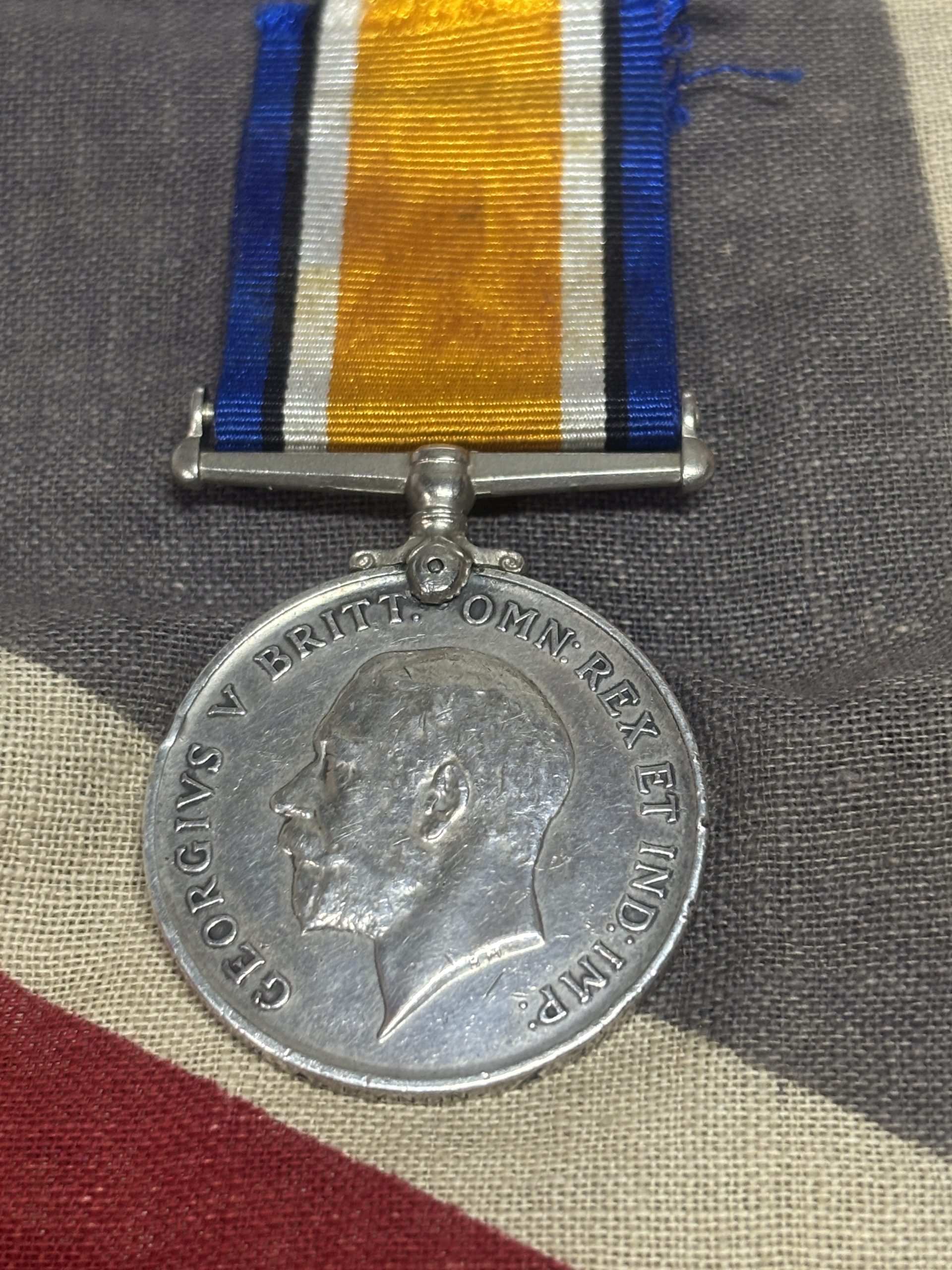
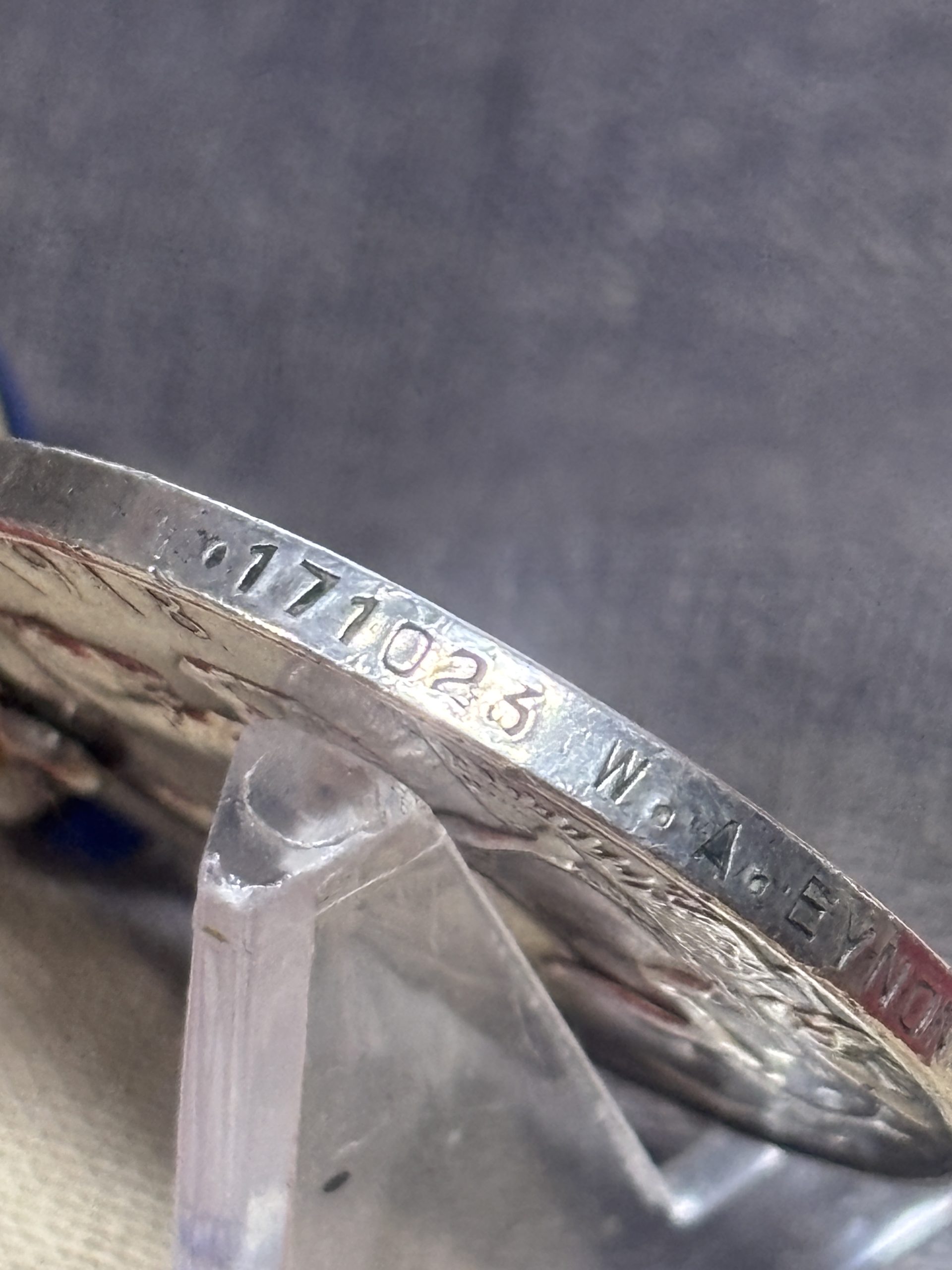
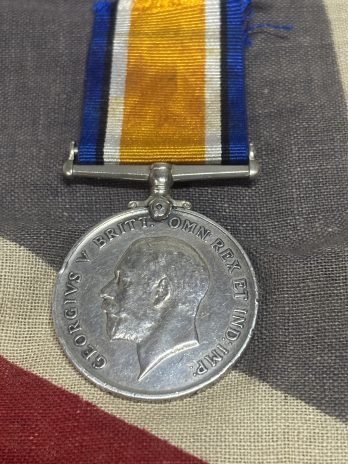
WWI Battle of Falklands (1914) BWM. Royal Navy. Eynon. Eynon. HMS Carnarvon.
£90.00
Availability: 1 in stock
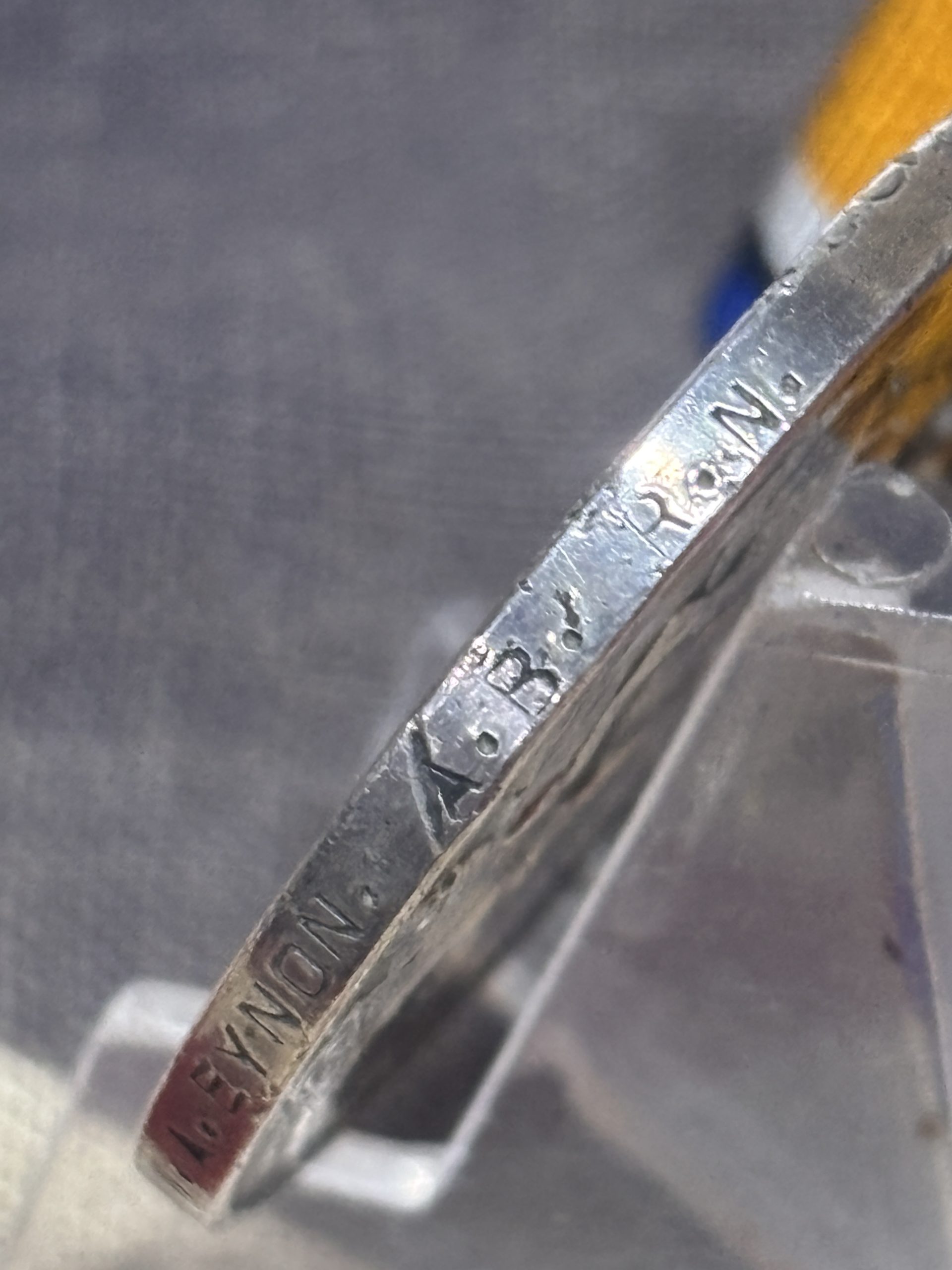
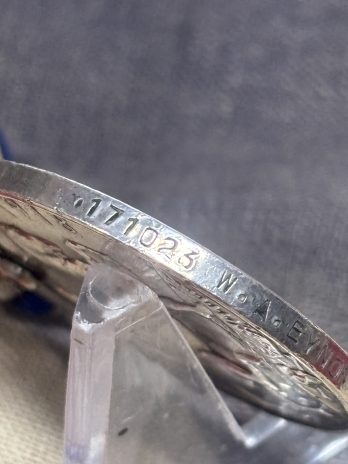
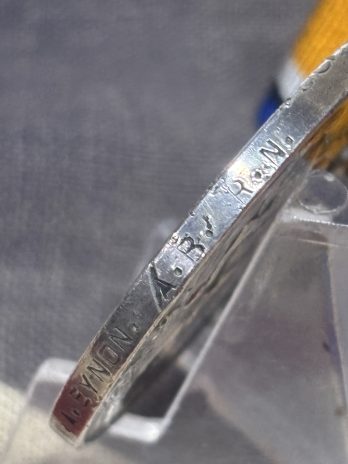
Correctly named 171023 WA Eynon AB RN
Born in 1876 to William and Margaret, William Alexander enlisted into the Royal Navy in 1894.
He married Beatrice Maud S Landicombe pre 1911 and we see them living in 1911 at 9 Gloucester Place in PLymouth with William listed as a seaman Royal Navy.
His WWI service began aboard HMS Carnarvon which he first boarded in November 1912 and remained aboard until November 1917.
When news of the outbreak of hostilities was received on 5 August, Carnarvon, now the flagship of Rear Admiral Archibald Stoddart, was at sea, making for the Canary Islands from Gibraltar. She was quickly sent to Cape Verde and captured the German merchant ship SS Professor Woermann on 23 August 1914. She escorted her prize to Freetown, Sierra Leone for disposal and resumed patrolling. She moved to the Brazilian coast in October and then proceeded to the Falkland Islands with the squadron commanded by Vice-Admiral Doveton Sturdee.
The Battle of the Falklands:
Upon arrival at Port Stanley on 7 December, Sturdee informed his captains that he planned to recoal the entire squadron the following day from the two available colliers and to begin the search for the East Asia Squadron, believed to be running for home around the tip of South America, the day after. Vice-Admiral Maximilian von Spee, commander of the German squadron, had other plans and intended to destroy the radio station at Port Stanley on the morning of 8 December. The appearance of two German ships at 07:30 caught Sturdee’s ships by surprise, but the Germans were driven off by 12-inch shells fired by the predreadnought battleship Canopus when they came within range around 09:20. Carnarvon completed recoaling at 08:00 and the squadron cleared the harbour by 10:30. Sturdee ordered “general chase” at that time, but Carnarvon could only manage 18 knots and fell behind the other British ships. His two battlecruisers were the fastest ships present and inexorably began to close on the German cruisers, opening fire at 12:55 that straddled the light cruiser Leipzig, the rear ship in the German formation. It was clear to Spee that his ships could not outrun the battlecruisers and that the only hope for any of his ships to survive was to scatter. So he turned his two armoured cruisers around to buy time by engaging the battlecruisers and ordered his three light cruisers to disperse at 13:20. Carnarvon, now 10 nautical miles behind, had no hope of catching the scattering German ships and continued to trail the battlecruisers.
Carnarvon finally came within range of the German armoured cruisers and opened fire shortly before Scharnhorst rolled over and capsized at 16:17. She then engaged Gneisenau until Sturdee ordered “cease fire” at 17:50. The German captain had started to scuttle his ship 10 minutes earlier when it was clear that the situation was hopeless and his ship sank at 18:00. Carnarvon rescued 20 survivors from Gneisenau, but only wreckage was visible when she later steamed through the area where Scharnhorst had sunk.
After the battle she participated in the hunt for the light cruiser Dresden that had escaped during the battle and investigated anchorages in Argentina, Chile and the island of South Georgia before proceeding north to Brazil in February. She struck a coral reef off the Abrolhos Archipelago on 22 February 1915 and had to be beached to avoid sinking. The ship received temporary repairs at Rio de Janeiro the following month. Carnarvon received permanent repairs in Montreal, Canada, from May to July after which she escorted several British H-class submarines from Halifax to the United Kingdom en route to Devonport. She then returned to Halifax where she was based for the rest of the year. Now assigned to the North America and West Indies Station, with its main base at the Royal Naval Dockyard in the Imperial fortress colony of Bermuda, she resumed her duties protecting British shipping for the rest of the war. After the United States Navy destroyer USS Stewart grounded at Bermuda on 16 August 1917, a cricket team from Carnarvon played a match against one from Stewart at the Bermuda dockyard. In 1919, she began serving as a cadet training ship, remaining in that role until she was listed for sale in March 1921. Carnarvon was sold for scrap on 8 November 1921 and subsequently broken up in Germany.
He was de-mobbed in 1919.
He died in 1955.
Related products
-
WWI
WW1 Trio. Charles Saunders. Royal Navy. Walthamstow. Discharged dead 1918
Original price was: £125.00.£115.00Current price is: £115.00. Add to basket


